
.jpg-40x40.webp "Curved Snaps Buttons")

.jpg-40x40.webp "Prong Snap Fasteners for Baby Clothes")


.jpg-40x40.webp "Snap Fasteners Half Dome type")
.jpg-40x40.webp "Magnetic Snaps Buttons")


-no5-k0010%20(3).jpg-40x40.webp "Eyetlets")


-K0014.png-40x40.webp "Steel Eyelets and Iron Metal Grommets")


.jpg-40x40.webp "Flat Brass Eyelets and Grommets")


.jpg-40x40.webp "Aluminum Eyelets and Grommets")
.jpg-40x40.webp "Galvanized Eyelets and Grommets")


.jpg-40x40.webp "Grommet Punching Dies")
.jpg-40x40.webp "Hole Cutter Tools and Punching Dies")


.jpg-40x40.webp "Pearls Types")


.jpg-40x40.webp "Water-Repellent Jacket Zippers")


.jpg-40x40.webp "Tires")

.jpg-40x40.webp "Round Braided Elastic Cord")


.png-40x40.webp "Bag Making Kits")

.png-40x40.webp "Continuous Zipper Sets")


-no5-k0010%20(3).jpg-590x590.webp "Eyelets and Grommets")
.jpg-590x590.webp "Rivets")
What Is an Eyelet? Types, Selection and Installation Guide

Choosing an eyelet may look like a small detail, but it can make a big difference in the finished product. The wrong size, barrel length or setting method can cause fabric to tear, tarpaulin edges to loosen or the eyelet to rotate after installation.
An eyelet, also called a grommet in many applications, is used to reinforce a hole in fabric, leather, tarpaulin, curtains, bags, footwear, banners and similar materials. It creates a cleaner opening for cords, laces, hooks, rings, curtain rods or fastening lines to pass through.
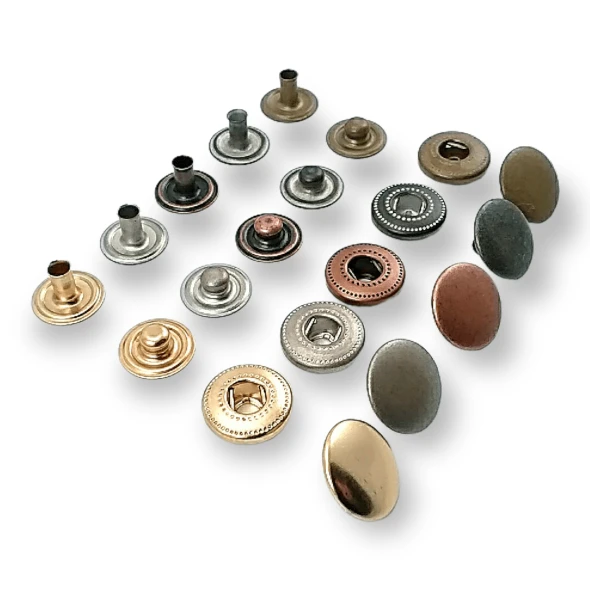
When the right eyelet is chosen and installed correctly, the hole is more likely to stay neat and stable during use. You can browse the full range in the Eyelets and Grommets category.
What Is an Eyelet?
An eyelet is a reinforcing fitting placed around a hole. It is commonly made from metal, plastic or zinc alloy, depending on the application. Its main purpose is to support the edge of the hole and reduce wear caused by cords, laces, hooks or repeated movement.
Eyelets are widely used in curtain headings, tarpaulins, tents, banners, bags, shoes, belts, hoodies and leather goods. In a tarpaulin, an eyelet helps strengthen the point where a rope or hook is attached. In curtains, it allows the rod to pass through the fabric more smoothly. In footwear, it helps protect the lace hole from repeated friction.
For this reason, eyelets are not only decorative parts. They are practical components used to make connection points more reliable and easier to use.
What Should You Check Before Choosing an Eyelet?
The first step is to think about where the eyelet will be used. The same eyelet may work well on a light curtain but be unsuitable for a thick tarpaulin. One application may focus on appearance, while another may need more resistance to pulling, weather or repeated use.
Before selecting an eyelet, it helps to answer these questions:
- What will pass through the hole? A cord, shoelace, rope, hook, ring or curtain rod?
- How thick is the material? Light fabric, cardboard, leather, tarpaulin or multiple textile layers?
- How much stress will the part carry? A light tag, a decorative cord opening or a tarpaulin fastening point?
- How will it be installed? With a hand tool, a manual press or a production machine?
Once these points are clear, it becomes much easier to choose the right inside diameter, barrel length, material and setting tool.
Choosing Eyelets for Tarpaulins, Tents and Awnings
Eyelets used in tarpaulins, tents and awnings often carry more load than eyelets used in clothing or decorative items. They may be exposed to ropes, hooks, elastic cords, wind, tension and outdoor conditions.
The inside diameter should allow the rope or hook to pass through comfortably. The barrel length should also match the thickness of the tarpaulin. A barrel that is too short may not close properly on thick material. A barrel that is too long can leave the eyelet loose on thinner material.
For outdoor, banner and tarpaulin applications, the material of the eyelet should be considered together with the expected load and the installation method. The Eyelets and Grommets category includes different material and product groups for these applications.
How to Choose Eyelets for Curtains
The curtain rod diameter is one of the most important points when selecting curtain eyelets. The inside diameter of the eyelet should allow the curtain to slide along the rod without difficulty.
At the same time, the opening should not be unnecessarily large. Too much space between the rod and the eyelet can make the curtain look loose and may affect the shape of the pleats.
The weight of the curtain fabric also matters. Heavier blackout curtains may need a more substantial eyelet system, while lighter decorative fabrics usually need a more balanced and gentle option.
Eyelets for Bags, Leather, Belts and Footwear
In bags, leather goods, belts and footwear, eyelets often serve both a practical and decorative purpose. This means that the inside diameter is not the only thing to consider. The outer diameter, finish, shape and appearance after setting are also important.
For shoelaces, the eyelet should be wide enough for the lace to move smoothly. For bag handles, straps and drawcord openings, the load on the material should be considered. Thicker leather and layered synthetic materials may require a suitable barrel length and backing washer system.
Oval eyelets can also be useful when a longer opening is needed for a strap, flat cord or decorative fastening detail. In these cases, the cut-out shape and the eyelet shape should match properly.
Common Eyelet Materials
Steel Eyelets
Steel eyelets are often used for tags, cardboard, packaging, light textile work, hobby projects and decorative applications. They can be an economical option, but the material thickness, washer type and setting tool should still be selected carefully.
Brass Eyelets
Brass eyelets are commonly used in bags, leather goods, footwear, belts, garments and decorative textile products. They are especially useful when the metal finish is part of the design and the product needs a more polished appearance.
Stainless Steel Eyelets
Stainless steel eyelets can be considered for applications exposed to moisture, outdoor use, friction or frequent handling. They are commonly evaluated for tents, tarpaulins, awnings, outdoor products, banners and technical textile applications.
Aluminum and Galvanized Eyelets
Aluminum and galvanized eyelets are often chosen for tarpaulins, tents, banners, awnings, vinyl covers and larger fastening points. They can be useful where a wider opening is needed for ropes, hooks or fastening systems.
Plastic and Decorative Eyelets
Plastic eyelets may be useful where a lightweight or coloured solution is preferred. Decorative eyelets are often used in bags, accessories, footwear and fashion-oriented products where the visual detail is as important as the function.
A plastic eyelet should not be confused with a plastic backing piece. The eyelet is the main product itself, while a backing piece may be used behind the material in some setting systems.
Short Barrel and Long Barrel Eyelets
Barrel length is directly related to material thickness. It is one of the most important details in eyelet installation, even though it is often overlooked during product selection.
Short barrel eyelets can work well on lighter materials such as fabric, labels, cardboard and thin leather. Longer barrel eyelets may be needed for thicker tarpaulins, layered textiles, thick leather, bags and other heavier materials.
If the barrel is too short, it may not close securely over the washer or backing piece. If it is too long, the eyelet may remain loose, rotate after setting or leave an uneven appearance on the surface.
Before starting a larger production run, it is always useful to test the selected eyelet on a small piece of the same material.
How Are Eyelets Installed?
Installing an eyelet is straightforward when the hole size, setting die and pressure are correct. The usual process follows these steps:
- Choose the inside diameter. Select the opening size according to the cord, lace, rope, ring, hook or rod that will pass through it.
- Check the material thickness. Choose a barrel length suitable for the fabric, leather, tarpaulin or layered material.
- Prepare the hole. The hole should match the selected eyelet system. An oversized hole can leave the eyelet loose after installation.
- Place the eyelet. Insert the eyelet from the front side of the material. Place the washer, backing ring or matching component on the back side if the system requires one.
- Set it with the correct die. The barrel should close evenly without damaging the material.
- Inspect the finished installation. Check that the eyelet does not rotate, the edges do not cut the material and the back side has closed properly.
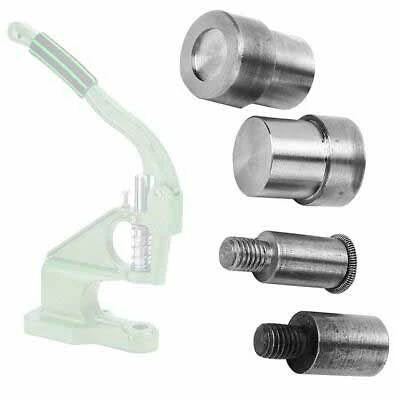
Eyelet Punching Dies and Setting Dies Are Different Tools
These tools are often confused, but they do different jobs. A punching die is used to create the hole before the eyelet is installed. A setting die is used to close and secure the eyelet over the washer or backing component.
If the hole is too large or too small, the eyelet may not sit correctly. If the setting die does not match the eyelet shape and measurements, the eyelet may close unevenly, rotate or fail to hold the material securely.
You can browse compatible equipment in the Tools, Dies and Molds category, where the site lists grommet setting tools, grommet punching dies and machine-related application equipment.
Can You Install Eyelets Without a Press?
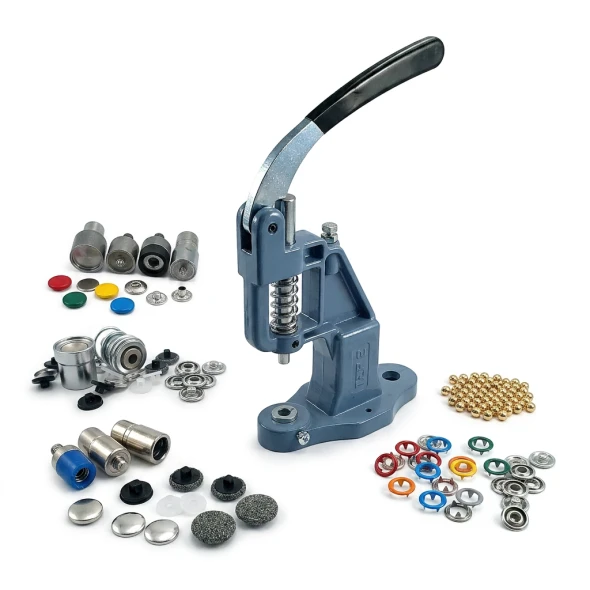
For small quantities, hand tools and hammer-operated setting tools can be used. For more regular work or repeated production, a manual press or suitable machine usually makes the process faster and more consistent.
When many eyelets of the same size need to be installed, using a compatible press and setting die helps maintain a more even result from piece to piece.
Common Eyelet Installation Mistakes
- Choosing by product number only without checking the actual inside diameter.
- Using a long barrel eyelet on very thin material.
- Using a short barrel eyelet on thick tarpaulin, leather or layered material.
- Punching a hole larger than the eyelet system requires.
- Using a setting die that does not match the eyelet shape or dimensions.
- Leaving out the backing washer or ring where the system requires one.
- Starting production without testing the eyelet on the actual material first.
Related Eyelet and Tool Categories
Frequently Asked Questions
Are eyelets and grommets the same thing?
In many textile, tarpaulin, bag and footwear applications, the terms eyelet and grommet are used for similar hole-reinforcement products. The actual inside diameter, outer diameter, barrel length, material and washer system may still differ from one product to another.
Which eyelet is suitable for tarpaulins?
The right choice depends on the thickness of the tarpaulin, the rope or hook size, the amount of pulling force and the outdoor conditions. Aluminum, galvanized and stainless steel options can be considered according to the application.
How do I choose the right eyelet size for curtains?
Start with the curtain rod diameter, then consider the fabric weight and the desired appearance. The opening should allow the curtain to move smoothly without leaving too much empty space around the rod.
Can one setting die be used for every eyelet?
No. A setting die should match the eyelet’s inside diameter, outer diameter, barrel length, washer type and overall shape. Even eyelets with similar names or sizes may require different dies.
Why does fabric tear around an eyelet?
Tearing can happen when the hole is too large, the barrel length does not suit the material thickness, the wrong setting die is used or the material needs more support around the opening.
What is the easiest option for beginners?
For first-time users, starting with a small quantity and testing the eyelet on the actual material is the safest approach. It helps confirm the hole size, setting method and final appearance before moving on to larger quantities.
Good eyelet selection starts with understanding the application. When the material thickness, opening size, expected load and setting method are considered together, the finished installation is cleaner, more stable and easier to use.
Related Products
.jpeg-230x230.webp "Hand Press Fastening Machine Eyelet Snap Cloth Coating Button Application Machine M0099")

.webp-230x230.webp "Self-Punching Eyelet Setting Die for 6 mm / 0.24 in - 6.6 mm / 0.26 in Inner Diameter Eyelets KLP0004D")
.webp-230x230.webp "Self-Punching Eyelet Setting Die for 6 mm / 0.24 in - 6.6 mm / 0.26 in Inner Diameter Eyelets KLP0004D")
-ER0024P-4.jpg-230x230.webp "Eyelet 25/64\" Stainless 10 mm (500 Pcs/Pack) ER0024P")
-ER0024P-5.jpg-230x230.webp "Eyelet 25/64\" Stainless 10 mm (500 Pcs/Pack) ER0024P")
.webp-230x230.webp "Complete Eyelet Workshop Starter Kit – Hand Press, 10 mm, 13 mm and 17 mm Eyelets with Punching and Setting Dies KOMPLE-ATOLYE-KUSGOZU-SET12")
.webp-230x230.webp "Complete Eyelet Workshop Starter Kit – Hand Press, 10 mm, 13 mm and 17 mm Eyelets with Punching and Setting Dies KOMPLE-ATOLYE-KUSGOZU-SET12")
People Also Bought
.jpg-230x230.webp "1 cm - 0,39\" Ring - Chain Link Ring 5000 pcs/ Pack A000H1")
.jpg-230x230.webp "1 cm - 0,39\" Ring - Chain Link Ring 5000 pcs/ Pack A000H1")
.webp-230x230.webp "1 cm / 0.39 in Oval Eyelet Setting Die for Oval Grommet Installation KLPK0010OVLNO2")
.webp-230x230.webp "1 cm / 0.39 in Oval Eyelet Setting Die for Oval Grommet Installation KLPK0010OVLNO2")
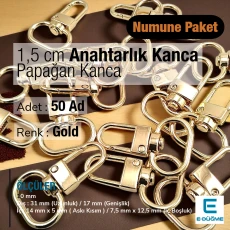
.jpeg-230x230.webp "1,5 cm -0.6\" Keychain Hook Gold Color Parrot Hook 50 Pieces / Pack A 546 PROMO")
.webp-230x230.webp "1.5 cm / 0.59 in Oval Eyelet Setting Die for Oval Grommet Installation KLPK0015OVLNO3")
.webp-230x230.webp "1.5 cm / 0.59 in Oval Eyelet Setting Die for Oval Grommet Installation KLPK0015OVLNO3")
Leave a Comment